
Buying and Selling
Real Estate Wire Fraud: How to Protect Your Closing Funds
 By Carol Porter, Realtor® · August 31, 2026 Updated: September 25, 2026

The email said the wiring instructions changed.
It was not your title company.
Real estate wire fraud can turn an ordinary closing email into a devastating financial loss. Criminals may impersonate a title company, escrow officer, lender, real estate professional, attorney, or another trusted person involved in a transaction. Their goal is simple: convince a buyer or seller to send money to an account controlled by the criminal.
The most important rule is also the simplest:
Stop. Verify. Then send.
Never rely on an unexpected email, text, or phone call to tell you where your closing funds should go.
How Real Estate Wire Fraud Happens
Real estate transactions can be attractive targets because they involve large transfers of money and multiple people communicating by email, phone, text, and electronic documents.
In some schemes, criminals compromise an email account belonging to someone involved in a transaction. In others, they create an email address, website, or message that closely resembles a legitimate one.
They may learn enough about a transaction to make the message convincing: the property address, names of people involved, expected closing date, title or escrow company, or approximate amount being transferred.
Then they wait.
Shortly before closing, the buyer or seller receives a message claiming that wiring instructions have changed, a different account must be used, or funds need to be sent quickly to avoid delaying the closing.
That sense of urgency is exactly when you should slow down.
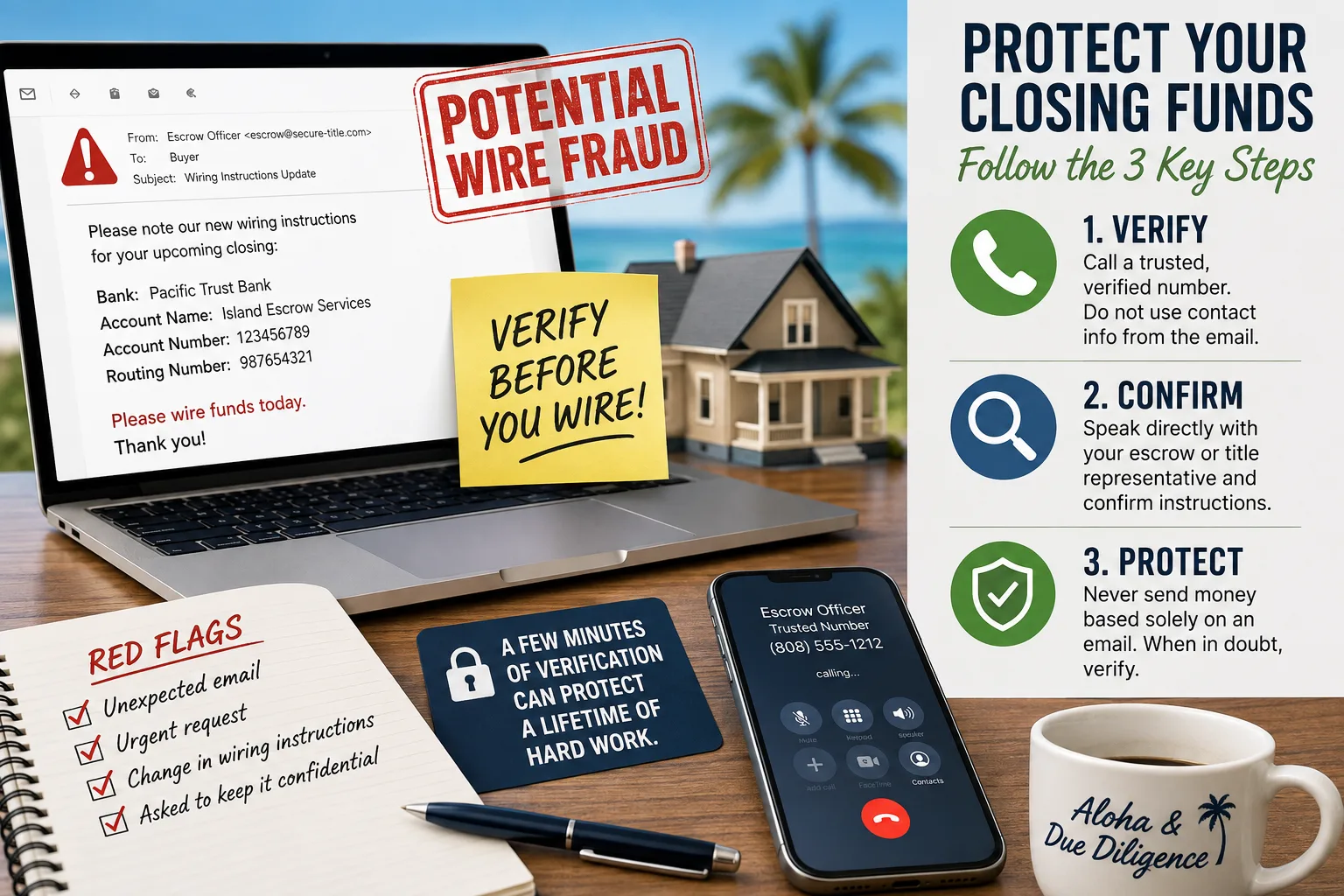
8 Ways to Protect Your Closing Funds
1. Verify wiring instructions by phone
Before sending money, call the title or escrow company using a phone number you independently verified.
Do not use the phone number contained in an unexpected email or text telling you where to send funds.
2. Be extremely cautious about changed instructions
A message saying wiring instructions have changed should immediately trigger additional verification.
Do not send money simply because an email looks legitimate or contains accurate information about your transaction.
3. Do not verify a suspicious email by replying to it
If an email account has been compromised—or the sender is being impersonated—replying may simply connect you with the criminal.
Instead, contact your title company, escrow officer, lender, or real estate professional through contact information you already know and trust.
4. Confirm the recipient and account details
Before authorizing a wire, carefully confirm the recipient’s name, financial institution, account information, and any other identifying details provided by the legitimate closing company.
A few minutes of verification is worth it when substantial funds are involved.
5. Be suspicious of urgency
Fraudulent messages often try to create pressure:
- “Send this immediately.”
- “Your closing will be delayed.”
- “We changed banks.”
- “Use these new instructions.”
Urgency should never override verification.
6. Protect your email account
Use a strong, unique password and enable multi-factor authentication whenever possible.
Be cautious about clicking links or opening attachments in unexpected messages, particularly messages connected to financial transactions.
7. Ask about alternatives before closing day
Well before closing, ask your title or escrow company how funds will need to be delivered and whether alternatives such as a cashier’s check are permitted for your transaction.
Do not assume an alternative payment method will be accepted. Confirm the requirements with the closing company.
8. Verify again before you send
Even if everything looks correct, make one final verification call using a trusted phone number.
Confirm the instructions verbally before authorizing the transfer.
Closing-fund rule
Stop. Verify. Then send.
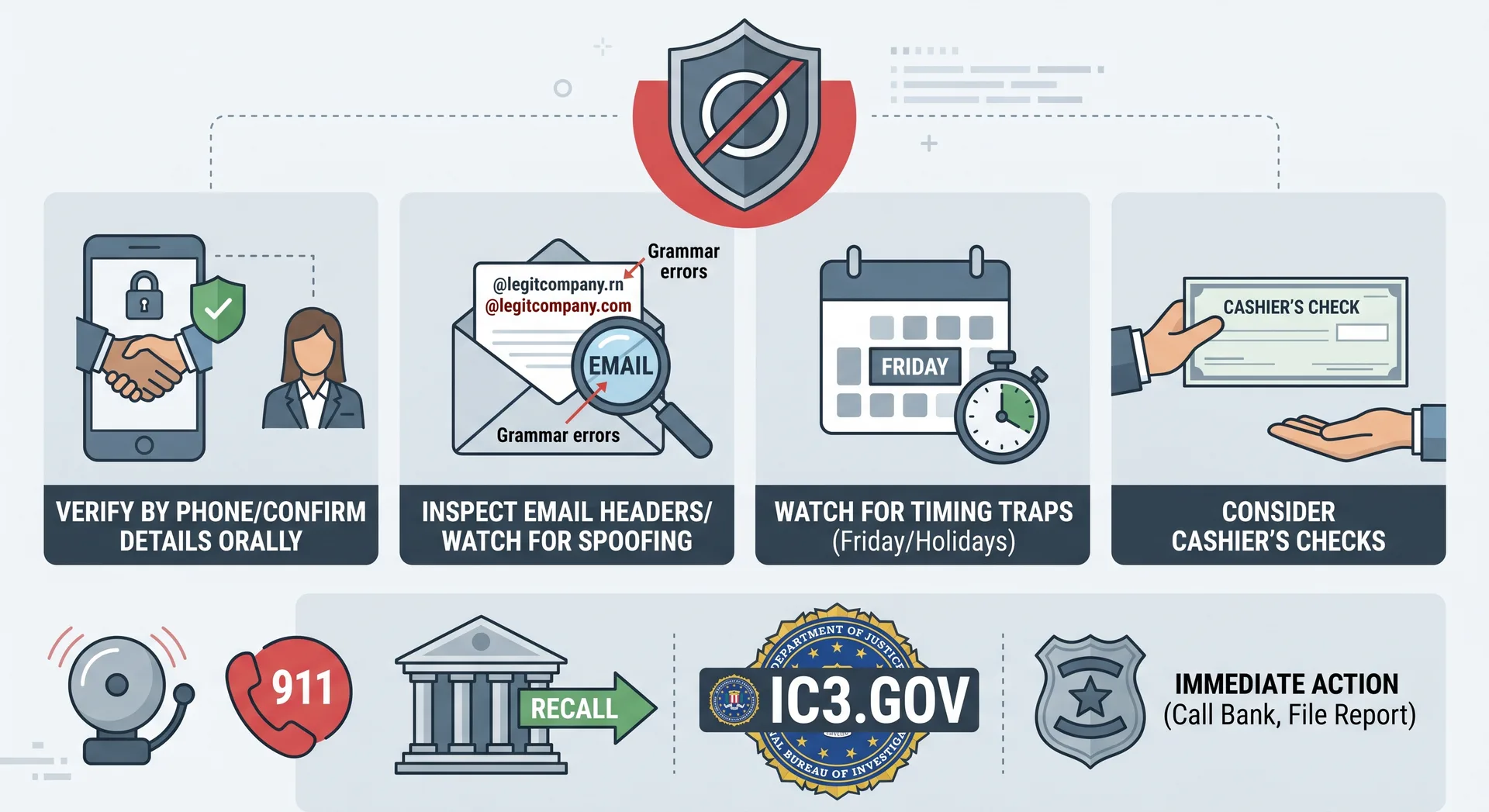
Wire Fraud and Hawaii Real Estate Closings
The basic fraud schemes affecting Hawaii real estate transactions are similar to those seen throughout the United States, but Hawaii transactions can present circumstances that make careful verification especially important.
Big Island buyers and sellers may be in different states or countries during a transaction. A buyer may be purchasing a Hawaii property remotely. Sellers may have already relocated. Lenders, escrow professionals, real estate agents, buyers, and sellers may all be communicating electronically and across time zones.
That makes a clear verification process important.
Before money needs to move, know:
- Who will provide legitimate closing instructions
- How those instructions will be delivered
- What phone number you will use to verify them
- Who you should call if anything changes or seems unusual
Do not wait until the day funds are due to figure this out.
If you are buying or selling real estate on the Big Island, ask questions about the closing process early so you know what legitimate communication should look like. My seller closing guide walks through good funds and wire fraud before you reach closing day.
What to Do If You Already Sent Money
If you believe closing funds were sent to a fraudulent account, act immediately.
-
1
Contact your bank or financial institution immediately. Tell them you believe the wire was fraudulent and request an immediate recall or reversal if possible.
-
2
Contact the legitimate title or escrow company. Tell them what happened and verify the correct account information.
-
3
Notify your real estate professional and other appropriate parties to the transaction.
-
4
Preserve the evidence. Save emails, text messages, wiring instructions, receipts, account information, phone numbers, and other communications related to the transfer.
-
5
Report the incident to the FBI’s Internet Crime Complaint Center (IC3).
-
6
Contact appropriate local law enforcement.
Time matters. Do not wait to see whether the money arrives at its intended destination before reporting a suspected fraudulent transfer.
Real Estate Wire Fraud FAQ
How do I verify real estate wiring instructions?
Call the title or escrow company using a phone number you independently know to be legitimate. Confirm the wiring information verbally before sending money. Do not rely on contact information contained in an unexpected message telling you where to send funds.
What if I receive an email saying my wiring instructions changed?
Do not send money based on the email alone. Do not reply to the message to verify it. Instead, independently contact the title or escrow company using previously verified contact information.
What should I do if I wired closing funds to the wrong account?
Contact your financial institution immediately and request a wire recall. Then notify the legitimate title or escrow company, preserve all communications, and report the suspected fraud promptly to the FBI’s Internet Crime Complaint Center.
Can my real estate agent send me wiring instructions?
The safest practice is to obtain and verify actual fund-transfer instructions directly through the appropriate title or escrow company according to its established procedures. If wiring information appears to come from someone unexpectedly, independently verify it before acting.
Can I use a cashier’s check instead of wiring closing funds?
Possibly, but it depends on the requirements of the closing or escrow company and the transaction. Ask well before closing what forms of payment are acceptable. Do not arrive at closing assuming a cashier’s check will be accepted.
A Simple Rule for My Big Island Clients
Real estate transactions already involve plenty of details. Protecting your closing funds does not need to be complicated.
Know in advance how your funds will be handled. Verify instructions independently. Treat unexpected changes involving money as a reason to stop and make a phone call.
Most importantly, my clients should know this:
I will never email you asking you to change verified wiring instructions or send sensitive financial information.
If you receive a message that appears to come from me and asks you to do something unusual with money or financial information, do not rely on the message.
Call me directly.
Stop. Verify. Then send.
Need Help With a Big Island Real Estate Transaction?
If you're buying or selling a home on Hawaii Island and have questions about what to expect during escrow or closing, contact Carol Porter before money needs to move.
Next step
Questions about your own search?
Every situation is different, and the details change the answer. Tell me what you’re considering and I’ll give you an honest read.