
Technology, Innovation, Stewardship and the Future of Hawaiʻi Island
Earl Bakken: From the Pacemaker to Hawaiʻi Island
The Medtronic co-founder and pacemaker pioneer came to Hawaiʻi Island looking for a home. His work here eventually encompassed healthcare, community, culture, technology and the history of Kīholo.
 By Carol Porter, Realtor® · October 4, 2026
Part of: Technology, Innovation, Stewardship and the Future of Hawaiʻi Island
Earl Bakken was fascinated by electricity from the time he was a child. The 1931 movie Frankenstein captured his imagination with the idea that electricity might restore life, and he spent his childhood building radios and electrical contraptions. Years later, that fascination would help change modern medicine.
In 1949, Bakken and his brother-in-law, Palmer Hermundslie, started a small business in a Minneapolis garage repairing medical electronic equipment. They called it Medtronic. In 1957, a power outage in the Twin Cities exposed a dangerous weakness in the medical technology then being used for children recovering from open-heart surgery. The pacemakers were large machines dependent on alternating current from the electrical grid. After an infant died during the outage, surgeon C. Walton Lillehei asked Bakken whether he could devise a portable, battery-powered alternative. Bakken adapted a transistorized metronome circuit he had seen in Popular Electronics and produced the first external wearable, battery-powered pacemaker.
I like that story not only because Bakken invented an important medical device. It was the way he approached the problem. He saw a system that was vulnerable, understood why it was vulnerable, and built something that removed the vulnerability. That became something of a pattern in his life.
Medtronic grew from a medical-equipment repair shop into one of the world’s major medical-technology companies. In 1960, Bakken wrote the Medtronic Mission, centered on alleviating pain, restoring health and extending life. He remained at the helm of the company for 40 years before retiring as chairman in 1989.
Retirement, however, didn't mean that he stopped building things.
Finding Hawaiʻi Island
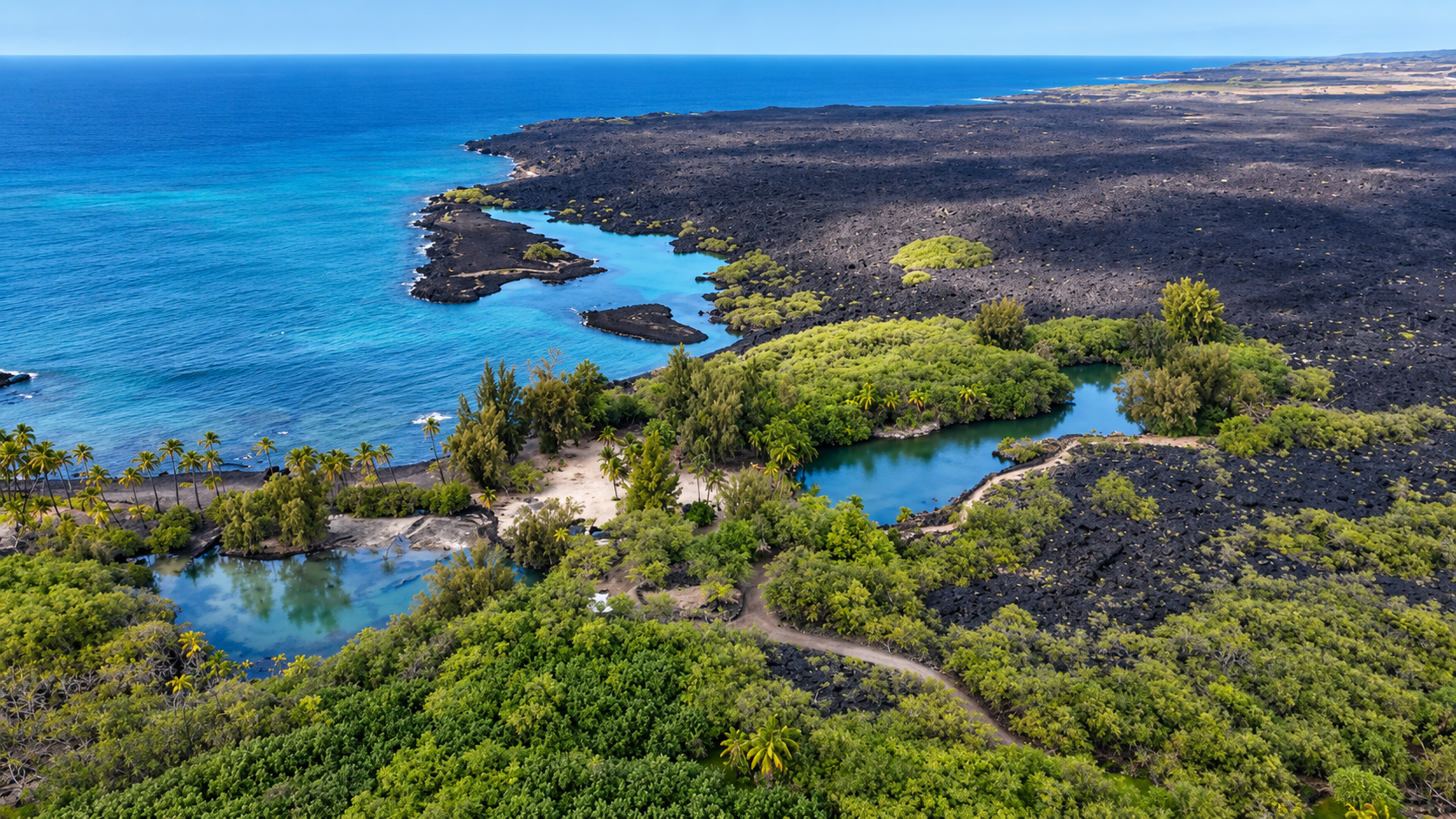
Bakken and his wife, Doris, had long dreamed of living somewhere tropical. In an account they wrote from Kīholo in 1995, they explained that they had considered and visited many places before choosing Hawaiʻi. They spent time on several islands, but a stay at Kona Village persuaded them that Hawaiʻi Island was where they wanted to live. They were married at Kona Village and began looking for a home along the west coast. Eventually Doris spotted a small advertisement for land at Kīholo Bay. They bought it.
The chronology in published accounts varies a little depending on what is meant by "moved." Bakken retired from Medtronic in 1989 and began shifting his life toward Hawaiʻi; local sources describe him as moving here then, while Medtronic dates the construction of his Hawaiʻi home to 1994. Other accounts describe a period when his life remained divided between Minnesota and Hawaiʻi. That seems entirely unsurprising. Creating a substantial home at Kīholo was not a matter of buying a finished house and moving into it.
The property that became Bakken Hale was remote. Contemporary accounts describe a site without utility power, a fresh-water supply or a conventional telephone connection. Bakken later described generating his own electricity, making his own water and operating his own wastewater system. This presented an interesting set of problems for an electrical engineer.
The home’s systems continued to evolve. For many years propane generators supplied its electricity. Eventually, advances in battery storage made it practical to replace much of that system with solar power and large-scale energy storage. By 2015, the property had a substantial solar array and a one-megawatt-hour battery system capable of operating the residence independently.
There is an obvious connection here to Henk Rogers and the energy experiments I wrote about at Puʻu Waʻawaʻa. But Bakken’s interests on Hawaiʻi Island moved in a different direction.
Rethinking healthcare in North Hawaiʻi
Bakken became deeply involved in the effort to create North Hawaiʻi Community Hospital in Waimea . He served as chairman of the Five Mountain Medical Community as the hospital was developed, and the hospital opened in 1996.
What interested Bakken was not simply bringing more medical technology to an underserved part of the island. He had spent his professional life developing sophisticated medical devices, but his ideas about healthcare had broadened considerably. He became interested in what he called "blended medicine": combining advanced Western medicine with greater attention to the patient’s environment, emotional well-being and other approaches to healing.
The idea was sometimes described as combining high tech with high touch. That is an interesting philosophy coming from someone whose fortune and reputation were built on medical technology. Bakken did not conclude that technology was unimportant. He concluded that technology alone was insufficient.
Bakken eventually described an even larger idea he called the "Healing Island": a vision of Hawaiʻi Island in which health extended beyond medicine to family, community, education, culture and the relationship between people and the land. The hospital was part of that idea, but not the whole of it.
His interests therefore extended beyond the hospital. He helped establish Tūtū's House in Waimea as a community resource for health, education and connection, and was involved with Five Mountains Hawaiʻi and The Kohala Center. He also supported Nā Kālai Waʻa and the voyaging canoe Makaliʻi, Friends of the Future and ʻImiloa Astronomy Center.
The common thread was becoming broader. Health was not just what happened inside a hospital. It was connected to education, culture, environment and community.
Learning the history of his own place
There is another part of Bakken’s Hawaiʻi story that parallels my own experience, and that of many people who come here: delving deeply into the history, culture, and language of Hawaiʻi. After Earl and Doris settled at Kīholo, they began learning about the place where they had chosen to live. They discovered that the landscape around them contained an extraordinary history: Hawaiian settlements and burial caves, ancient fishponds, connections to Kamehameha, ranching history, and stories held by families with long ties to Kīholo and the surrounding lands.
Instead of being satisfied with knowing a few of those stories, they decided to document them. Doris took the lead, contacting people including Hannah Springer and members of the Hind family. Eventually they were directed to Marion Kelly, an associate professor of Ethnic Studies at the University of Hawaiʻi at Mānoa who had written ethnohistorical reports for Bishop Museum. Earl and Doris commissioned Kelly, assisted by researcher Helen Wong Smith, to prepare A Brief History of the Ahupuaʻa of Puʻu Waʻawaʻa and Its Neighbors in North Kona. I admire their curiosity and the way in which they preserved local knowledge. They bought a piece of land and then wanted to learn everything about what had happened there before they arrived — and to share that knowledge freely.
The resulting history extends far beyond their own property. It follows the ahupuaʻa from Kīholo inland through Puʻu Waʻawaʻa, documenting Hawaiian land use, fishponds, water, ranching and the remarkable natural history of the area. The book is also refreshingly careful about its own limitations. The Bakkens acknowledged that information was missing, accounts sometimes conflicted, and errors might remain. They invited people with additional knowledge to contact them so that later versions could be improved. I respect this approach to becoming part of a place: first recognize that there is a history you don't know, and then make an effort to learn it.
It also creates an unexpected connection in this series. The history the Bakkens commissioned included Puʻu Waʻawaʻa, where another technology entrepreneur, Henk Rogers, would later pursue his own experiments involving energy, water and sustainability.
Land, ownership and public access
Bakken’s relationship with Kīholo eventually included another interesting real-estate story. In 1999, he purchased an adjacent three-acre beachfront property formerly owned by country singer Loretta Lynn for $2.7 million. He subsequently exchanged that parcel with the State of Hawaiʻi for six acres of state land mauka of his home, where he wanted to build a caretaker’s residence. Appraisals were used to determine the relative value of the properties, and the Land Board approved the exchange in 2000. The former Lynn property became state land.
This is how land assembly actually works here: patience, relationships, and the Land Board.
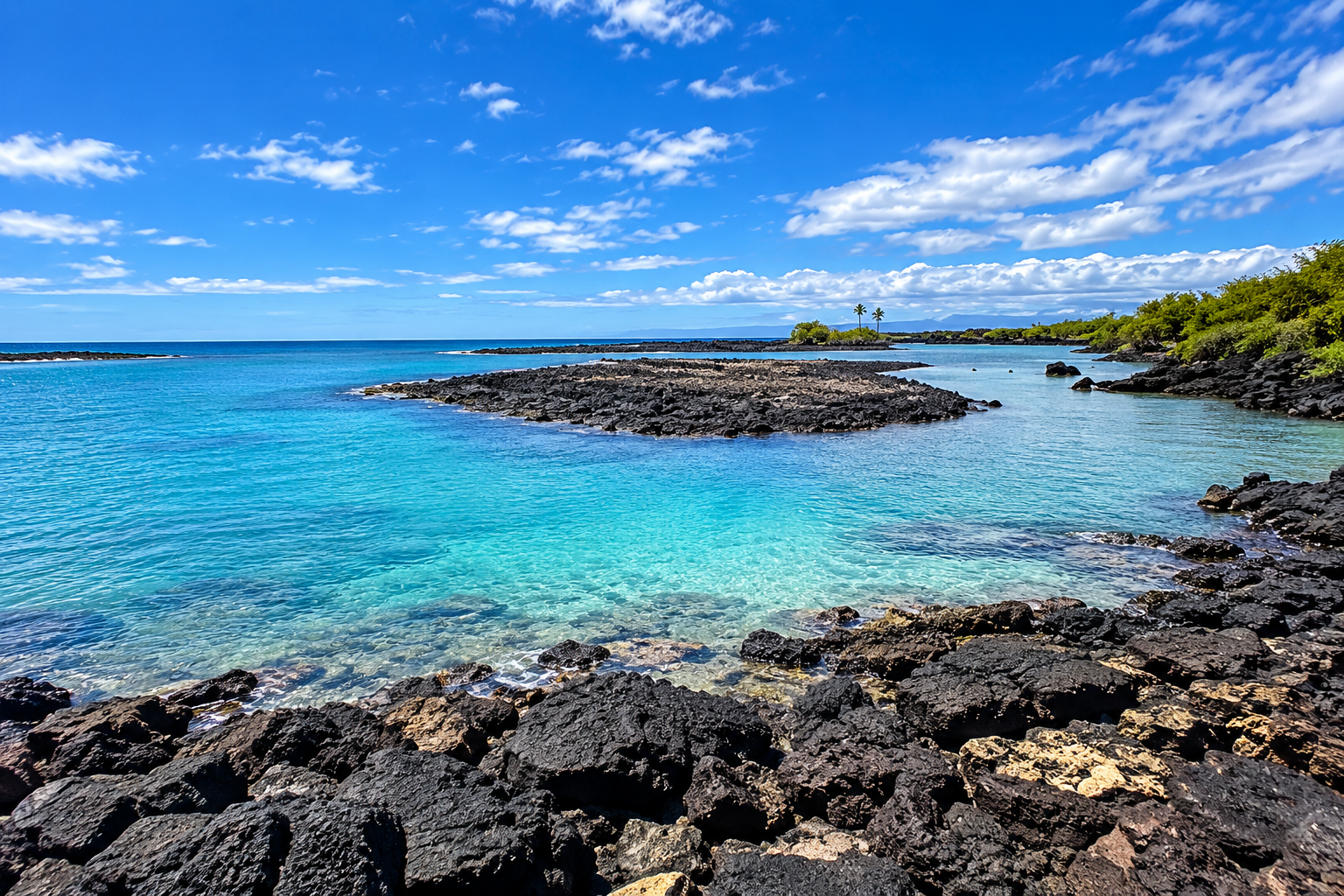
I wouldn't describe that simply as philanthropy, because it wasn't. It was a negotiated land exchange in which Bakken received something he wanted as well. But the outcome matters: a highly desirable piece of Kīholo shoreline moved from private to public ownership. That is one of the things that makes Hawaiʻi Island real estate endlessly interesting to me. Property can be simultaneously a home, an investment, part of an ecosystem, part of a cultural landscape and part of a much longer history of human use. Ownership is important, but it is never the entire story.
Technology, people and place
Earl Bakken spent much of his career thinking about the relationship between people and technology. His first pacemaker solved a very specific infrastructure problem: a patient’s heartbeat should not depend on whether electricity was flowing from a wall outlet. Decades later, his interests had expanded to larger systems. How should a hospital make people feel? What contributes to a healthy community? How can a remote home generate its own energy and water? What should someone learn about a place after choosing to live there?
Those questions are one reason Bakken belongs in this series. Henk Rogers came to Hawaiʻi Island after building a technology business and eventually began experimenting with energy, water, batteries, hydrogen, native plants and resilience. Earl Bakken arrived after building a medical-technology company and turned much of his attention toward healthcare, community, education, culture and the place he had chosen as home. What connects the stories is interesting: both men had spent their careers asking whether existing systems could work differently. Hawaiʻi Island gave them an entirely new set of systems to think about.
For me, that eventually comes back to real estate. A property is never only a house and a parcel of land. It exists within systems of water, energy, transportation, healthcare, communications, geology, climate, history and community. Those systems are unusually visible here.
Bakken came to Hawaiʻi Island looking for a place to live. What interests me is everything he did after he found it.
Sources and further reading
- National Academy of Engineering: Earl E. Bakken (1924–2018)
- Medtronic: Celebrating Earl Bakken
- Medtronic: Company History
Related reading
- Technology, Innovation, Stewardship and the Future of Hawaiʻi Island , the series this article is part of.
- Henk Rogers: From Tetris to Energy Independence to the Moon , on the energy experiments at Puʻu Waʻawaʻa.
- North Kona , the district that includes Kīholo.
Next step
Questions about your own search?
Every situation is different, and the details change the answer. Tell me what you’re considering and I’ll give you an honest read.